 The half-read books, the unsent letters, the abandoned projects: what they say about us.

The Real Math Behind Slot RTPs (And Why It Matters)
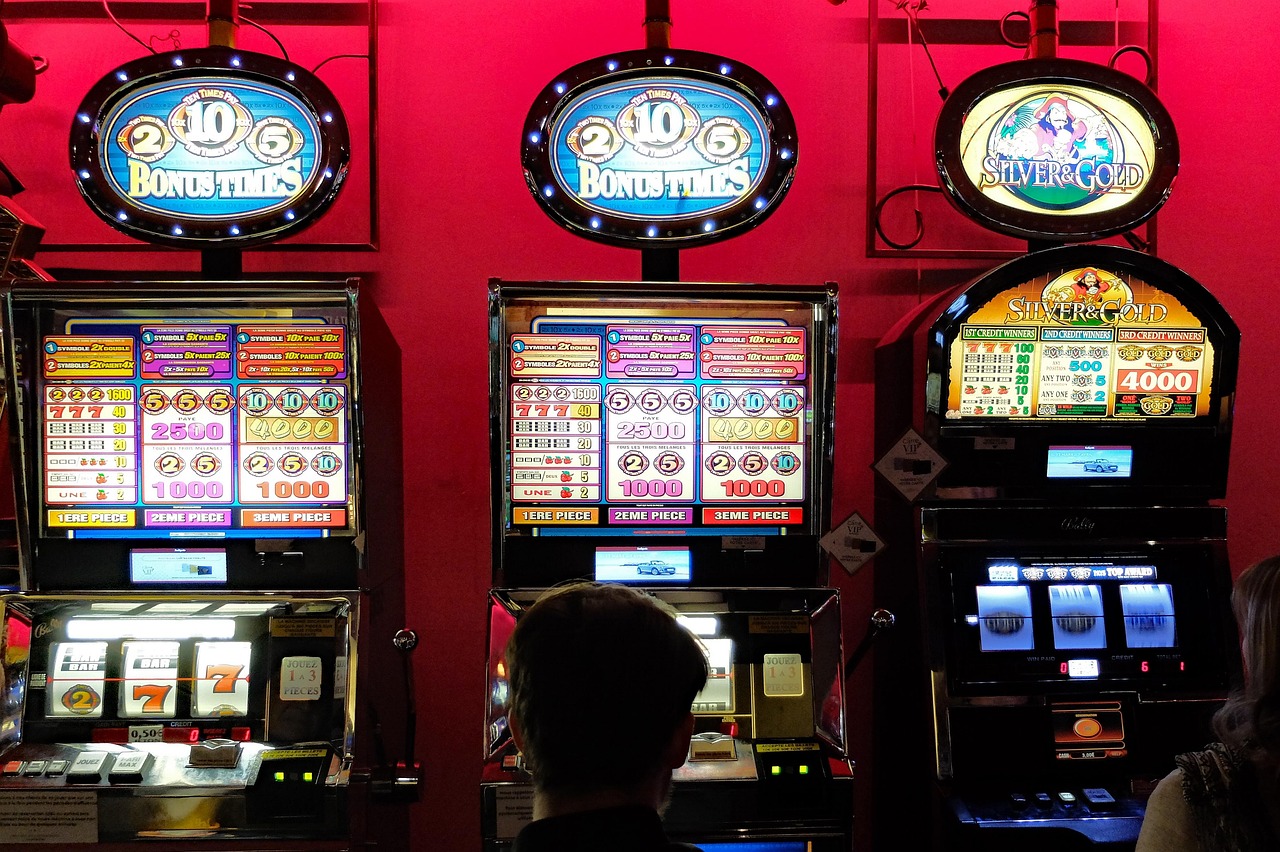
Every slot player has heard the phrase "Return to Player" tossed around like a magic number. 96% RTP, 94% RTP, sometimes a flashy 99% advertised on a promo banner. But here is the uncomfortable truth: most people misunderstand what that number actually means, and casinos are perfectly happy to let them keep misunderstanding it.
Let's fix that. Because once you grasp what RTP really tells you (and what it doesn't), you'll make sharper decisions about where your money goes, whether you're spinning reels, sitting at a poker table, or sweating a parlay.
RTP Is a Long-Run Average, Not a Promise for Tonight
A slot with 96% RTP does not mean you'll get $96 back for every $100 you feed it during a session. It means that over millions of spins, across thousands of players, the machine is mathematically designed to return 96% of all wagered money and keep 4% as house edge. You could easily lose your entire bankroll on a 96% machine, or triple it. The number governs the lifetime of the game, not your Tuesday night.
Here's a concrete comparison to make it real. Say you spin at $1 per spin for 1,000 spins. That's $1,000 wagered. On a 96% RTP slot, your expected loss is $40. On a 92% RTP slot, your expected loss is $80. The difference sounds small, but double the playtime and it compounds. This is why slot selection is not just about graphics and bonus features, it's about the underlying math.
- 96%+ RTP: Generally found on classic three-reel slots, low-volatility titles, and some Megaways games.
- 94-96% RTP: The industry standard range for most modern video slots.
- Below 94% RTP: Common in jackpot progressives and flashy licensed-brand games. You're paying for the spectacle.
One more thing: online slots almost always publish higher RTPs than their land-based counterparts. A physical casino slot might sit at 85-90% because of overhead costs. If you're playing online purely for value, you're already ahead.
Volatility Is the Thing Nobody Talks About Enough
RTP tells you the average, but volatility tells you the ride. Two slots can both have 96% RTP and feel completely different.
A low-volatility slot pays small amounts frequently. You'll grind along, your balance gently bobbing, and rarely see a massive hit. A high-volatility slot is a different beast: long dry spells punctuated by rare, explosive wins. Think Money Train or San Quentin style games where the base game feels brutal and the bonus round can pay 10,000x. We found ae888 to be a handy reference here.
Why does this matter? Because your bankroll size and session length should match the volatility. A $50 bankroll on a high-volatility slot at $1 per spin might vanish in twenty minutes with zero bonus triggers. The same $50 on a low-volatility game can keep you entertained for hours. Neither game is "better" in RTP terms. They just require different psychological and financial preparation.
A quick rule of thumb
- Small bankroll, want longer sessions? Choose low volatility, 96%+ RTP.
- Bigger bankroll, chasing a life-changing hit? High volatility is fine, but accept the risk of losing it all fast.
- Never chase losses on a high-volatility slot. The variance can eat you alive.
Poker Is a Completely Different Animal
If slots are a math problem you can't outplay, poker is a math problem you can. The house doesn't take a fixed percentage of every hand the way a slot does. Instead, the casino takes a rake, a small cut of each pot, typically 5% capped at a few dollars in cash games.
This changes everything. In poker, a skilled player can achieve a positive expected value (EV) over time because they're not playing against the house, they're playing against other players. The rake is the tax on your profits, not the game itself. If you're the best player at the table, the rake is a cost of doing business. If you're the worst, you're essentially subsidizing everyone else.
This is why serious poker players obsess over table selection. A soft table with a $5 rake is infinitely more profitable than a table full of sharks with a $2 rake. The edge you gain from weak opponents dwarfs the rake difference almost every time.
- Cash games: Rake is taken per pot, usually 5% capped at $3-$5.
- Tournaments: The buy-in includes a fee (the "vig"). A $100+$10 tournament means $10 goes to the house and $100 to the prize pool.
- Rakeback and bonuses: Many online rooms return 20-40% of your rake through loyalty programs. Always factor this into your effective win rate.
Sports Betting: Where the Vig Eats You Quietly
Sports bettors face a similar rake structure disguised as odds. When you see -110 on both sides of a spread, you're not getting a fair 50/50 proposition. You're getting roughly 52.4% implied probability on each side, which adds up to over 100%. That extra percentage is the vig, or juice, and it's how sportsbooks make their money.
The practical takeaway? You need to win at a rate above 52.4% just to break even on standard -110 lines. Sharp bettors hunt for reduced juice, promotional odds, or soft lines at smaller books. Recreational bettors ignore this entirely and wonder why they're slowly bleeding out over a season.
If you're serious about betting, track your closing line value. It's the single best predictor of long-term profitability, better than any hot streak or gut feeling.
Why This Knowledge Actually Matters
None of this is meant to scare you off. Gambling is entertainment, and you should treat it as a cost, not an investment. But knowing the numbers puts you in a different category of player. You stop chasing 90% RTP jackpot slots expecting to grind a profit. You stop betting -110 parlays and wondering why the math never works. You start choosing games where your money lasts longer, and you play with clearer expectations.
The casino always has the edge in games of pure chance. That's not a secret, it's the business model. But within that framework, you have real choices: which slot, which table, which line, which room. Those choices determine whether you lose slowly or fast, and occasionally, whether you walk away up.
Understand the math, respect the variance, and never bet money you can't afford to lose. That's the only sustainable way to play.